Why Are All-Metal Hair Trimmers Becoming the New Standard in Grooming?
Across global grooming markets, the rise of the All-Metal Hair Trimmer marks a pivotal shift toward durability, power, and professional-grade control. As consumers increasingly prioritize long-lasting materials, ergonomic engineering, and high-torque cutting efficiency, all-metal designs have emerged as a preferred solution for both home users and barbers.
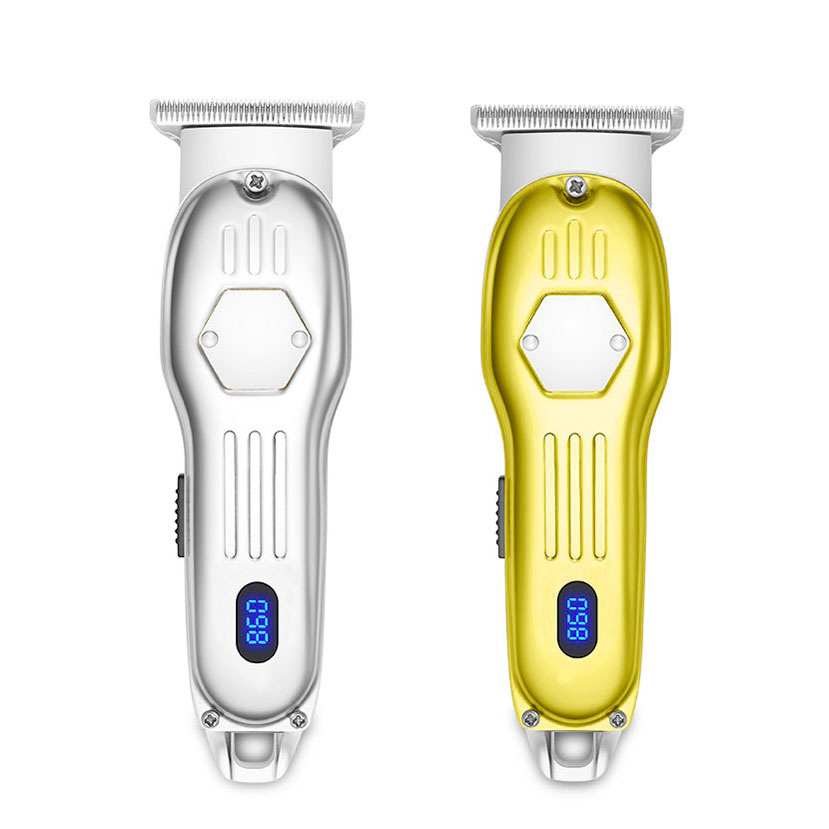
At the center of this shift is a design philosophy that emphasizes structural integrity, heat management, vibration reduction, and precision alignment. By eliminating plastic housings and replacing them with solid metal shells—typically aluminum alloy or zinc alloy—the trimmer achieves higher stability and extended service life. This article analyzes the product’s mechanical structure, motor efficiency, blade engineering, battery configuration, and expected technological trajectory that will influence the grooming-tool segment in years to come.
How Does a Fully Metal Structure Enhance Cutting Performance?
The fundamental value of an All-Metal Hair Trimmer lies in how its construction directly affects the cutting experience. Metal casings add weight, balance, and durability, allowing the trimmer to remain stable during prolonged use. The enhanced rigidity of metal also ensures blade alignment remains consistent, which improves precision on dense, thick, or coarse hair.
Below is a detailed parameter list to provide a clear technical understanding of a standard professional-grade All-Metal Hair Trimmer model:
Product Parameter Table
| Parameter Category | Specification |
|---|---|
| Housing Material | Full aluminum alloy or zinc alloy, polished/anti-slip textured finish |
| Blade Material | High-carbon stainless steel or titanium-coated moving blade + fixed T-blade |
| Motor Type | High-torque rotary motor, 6000–7500 RPM depending on model |
| Battery Capacity | 1800mAh–2500mAh lithium battery |
| Charging Time | 2–3 hours |
| Running Time | 180–240 minutes continuous operation |
| Cutting Length Control | Adjustable taper lever or snap-on guards (1–6 mm) |
| Noise Level | ≤60dB during standard operation |
| Heat Dissipation Mechanism | Integrated circulation vents within metal body |
| Power Indicator | LED or digital display battery meter |
| Usage Scenarios | Haircutting, outlining, beard trimming, edging, fading |
How Does Material Choice Influence Performance?
Metal bodies deliver a clear set of advantages:
-
Weight Balance: The additional density helps stabilize hand motion, leading to more accurate lines and edges.
-
Durability: Resistance to cracks and deformation ensures longer operational lifespan.
-
Heat Conduction: Metal disperses heat faster than plastics, reducing blade temperature during long sessions.
-
Motor Stability: The rigid structure reduces vibration, which improves cutting precision and user comfort.
How Does the Motor Impact Cutting Outcomes?
A high-torque rotary motor delivers uniform blade movement even when passing through thick or curled hair. This prevents tugging and uneven cutting. For professional barbers, RPM consistency is essential for clean outlines, low fades, and tight taper work. Metal bodies further support the motor by reducing internal resonance.
How Do These Features Translate Into Real-World Grooming Results?
1. Precision Blades for Multi-Angle Cutting
The blade system is often the defining element of any trimmer. In all-metal models, the blade assembly benefits from more stable mounting points, reducing alignment deviation. This leads to:
-
smoother shaving of close edges and borders
-
reduced hair pulling due to consistent blade tracking
-
cleaner transitions when blending fades
-
better accuracy in fine-line beard sculpting
Titanium or DLC (Diamond-Like Carbon) coated blades further enhance sharpness retention and corrosion resistance.
2. Ergonomic Metal Grip and Anti-Slip Texture
Metal surfaces can be engineered with grooves, knurling patterns, or textured ridges. These features offer:
-
secure handling even with moist or oily hands
-
reduced wrist fatigue during prolonged trimming
-
enhanced grip stability in professional barbershops
3. High-Capacity Lithium Battery and Efficient Power Management
The combination of a large-capacity battery and efficient motor enables longer runtime, a critical requirement for barbers who manage multiple clients per day. Advanced designs include:
-
dual-mode charging (USB + docking station)
-
smart power regulation that preserves torque throughout battery usage
-
over-voltage and over-heat protection
4. Thermal Optimization Through Metal Conduction
Metal trimmers often incorporate vent ports and airflow channels that work with the body’s natural conductive properties. This combination prevents motor overheating, maintains blade sharpness, and protects internal circuitry.
How Will All-Metal Hair Trimmers Evolve Next?
The market for grooming appliances is rapidly expanding, influenced by lifestyle shifts, barbershop culture, and the increasing popularity of self-styling. Future advancements in all-metal trimmers will likely center around the following areas:
1. Integrated Smart Displays
Digital displays are becoming more common, offering real-time insights into:
-
battery percentage
-
RPM speed modes
-
charging status
-
blade health alerts
As consumer expectations rise, more models will integrate diagnostic functions.
2. Multi-Mode Motor Speed Control
Users may soon see more trimmers offering three-to-five adjustable speed levels. This allows:
-
gentle trimming for sensitive skin
-
high-speed cutting for dense hair
-
precision detailing with stable mid-range speeds
3. Enhanced Blade Coatings for Longevity
Future development may focus on next-generation coatings such as:
-
nano-titanium layers
-
ceramic hybrid blades
-
DLC variants with higher heat resistance
These innovations aim to extend blade life and reduce friction.
4. Modular Attachments and Customization
More manufacturers are expected to introduce modular systems—interchangeable heads, beard guides, trimming combs, and fine-detail cutters. Customization will cater to global grooming variations.
5. Sustainable Manufacturing
Consumer preference is leaning toward recyclable metal housings, energy-efficient motors, and eco-friendly packaging. Future models will emphasize lifespan extension to reduce electronic waste.
Frequently Asked Questions
Q1: How does an All-Metal Hair Trimmer differ from plastic-body trimmers in daily use?
A1: The metal body provides superior stability, weight distribution, and heat dissipation, allowing for smoother cutting and reduced vibration. This enhances precision, particularly for detailed edging and fade transitions. Plastic trimmers may be lighter, but they are more prone to vibration, heat buildup, and structural wear over time.
Q2: How should the blades of an All-Metal Hair Trimmer be maintained for long-term sharpness?
A2: Blades should be cleaned after every use, dried thoroughly, and lubricated with blade oil to minimize friction. Periodic alignment checks, especially for T-blades, ensure consistently even cutting. Depending on usage frequency, deep cleaning or blade replacement every 6–12 months helps maintain peak performance.
How Can Businesses and Consumers Benefit From Choosing a Premium All-Metal Hair Trimmer?
The rise of the All-Metal Hair Trimmer reflects a larger trend toward durability, structural quality, and advanced grooming capability. Its robust housing, precision blades, efficient motor system, and professional handling experience make it a strong choice for barbers, stylists, and consumers seeking long-term reliability. With future innovations focusing on smart displays, advanced blade coatings, and customizable attachments, the all-metal category is poised for continued growth in global grooming markets.
Manufacturers capable of combining engineering precision with user-oriented design will lead the next stage of this evolution. Among the companies contributing to this advancement, Ningbo Boersheng Electric Appliance Co., Limited continues to play an active role in producing high-quality grooming tools that align with professional expectations. For business inquiries or collaboration opportunities, please feel free to contact us for more information.